
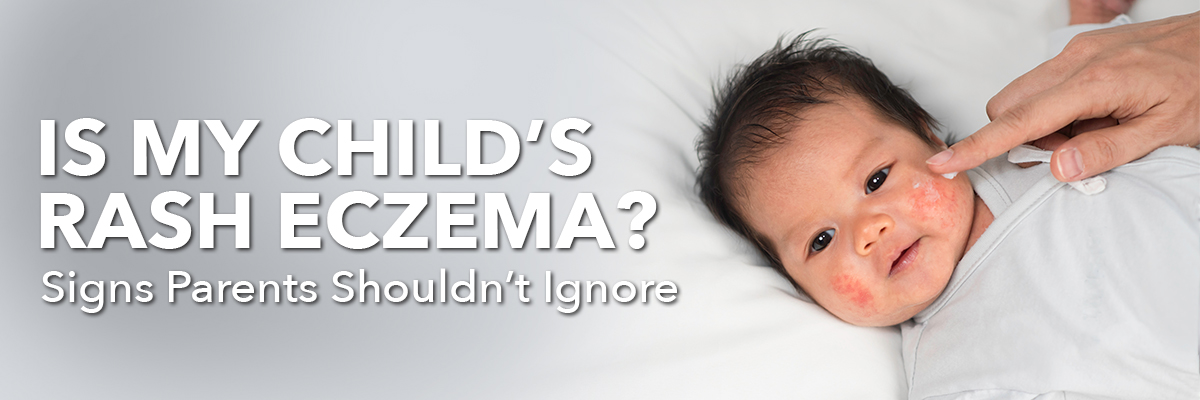
Unsure if your child’s rash is eczema or something else? Every parent knows the stress that comes with rashes on their children, so we’re shedding light on this skin condition that is all too common but can be difficult to diagnose at home.
If your child is experiencing discomfort from a rash, you understandably want to know what it is and how to treat it as soon as possible. In this article, we dive into the details of eczema in children to help you navigate this skin condition and feel more confident in caring for your child’s skin.
What Childhood Eczema Looks Like
Eczema is common in children – according to the Centers for Disease Control, more than 10% of children in the U.S. have eczema. Different types of eczema vary in symptoms and severity; the most widespread type among young children is atopic dermatitis, affecting more than 9.6 million children under the age of 18, according to the National Eczema Association.
Depending on your child’s age, eczema can manifest differently and may change over time. Here are the most common signs of eczema to look out for based on your child’s age:
Infants (under 1 year):
- Red, scaly patches of skin that are itchy or irritating to your baby. These patches can vary in size and appear raised or sunken.
- Dry and flaky skin, most commonly on the scalp, forehead, cheeks, or on the arms and legs. It’s important to note that while babies often have dry skin on their scalp, it is not always eczema.
- Blisters or crusty skin that appears quite irritated and may ooze or weep. These symptoms are less common.
- Thickened or leathery skin, which can manifest over time if eczema is left untreated.
Toddlers and preschoolers (2-4 years):
- Symptoms in toddlers are similar to those in infants; however, patches of dry, itchy skin often appear in elbow creases, behind the knees, or on the wrists and ankles. Toddler-age children are more likely to scratch and cause greater irritation and possible infection, so eczema must be treated as soon as possible.
School-age children (5+ years):
- Red, inflamed patches of skin that worsen during flare-ups. These areas often manifest on the hands, face, and within skin folds.
- Dry and scaly skin patches that appear flaky and cause itchiness.
- Rough, leathery skin, called lichenification, in which the skin becomes thickened or discolored. Lichenification is often caused by chronic scratching, which is more common in this age group and can lead to infection or disrupt sleep and daily life.
- Oozing, crusty, or blistered skin can occur in more severe cases or as a result of infection, and should be treated immediately.
How You Can Treat Childhood Eczema at Home
While it’s always best to visit a dermatologist for a clear diagnosis and treatment plan, there are at-home treatments and everyday healthy habits that can bring your child some relief if you suspect they are suffering from eczema.
- Bathe your child in lukewarm water and use fragrance-free shampoos and soaps.
- Rinse your child’s skin completely to remove shampoo or soap. If your child is taking a bath, do a final rinse from the shower head to ensure all residues are washed away.
- Apply ointment or a fragrance-free moisturizing cream to your child’s skin following bathtime while the skin is still damp.
- Moisturize twice daily with a fragrance-free moisturizer, even when eczema is not flaring! This will help minimize future flares.
- Dress your child in soft fabrics that are 100% cotton to reduce irritation.
- Wash your child’s clothing with fragrance-free detergent and skip the dryer sheets or fabric softener to remove all possible irritants.
- Reduce the effects of scratching by trimming your child’s nails and putting them to bed with cotton gloves or socks to help protect the skin.
- Use over-the-counter anti-itch products like hydrocortisone cream, which may provide short-term relief for mild flare-ups. Always follow package directions and consult your doctor before using regularly, and if you don’t see improvement.
When to Visit the Dermatologist
Often, eczema needs more than at-home care, especially for children who are often more sensitive to discomfort and persistent irritation.
We recommend having your child visit a dermatologist at the first sign of eczema, especially if initial at-home treatments provide no relief.
If your child exhibits any of these signs or symptoms, it’s time to visit your dermatologist.
- Constant itching and discomfort that is interrupting your child’s sleep or impacting their daily life.
- The appearance of open sores or red, flaky patches on your child’s skin.
- Signs of infection, such as swelling, oozing, or yellow crusts
- Spreading of the rash to more parts of the body.
Treating eczema (and any rash!) quickly is best for easing discomfort, preventing greater complications, and improving your child’s quality of life – and yours.
Protecting Your Child’s Skin for Life
Because eczema can manifest in so many different ways, it’s important to visit a dermatologist for a clear diagnosis and treatment plan for your child.
At the Dermatology Center of Indiana, our expert, board-certified dermatologists and providers create a welcoming, friendly environment to examine your child’s skin and discuss the best treatment plan for their needs. From prescription creams to more advanced and targeted therapies, we offer the latest, evidence-based solutions to get your child back to just being a kid.
Schedule an appointment today to see how we can help bring peace of mind and healthier skin for your little one.